

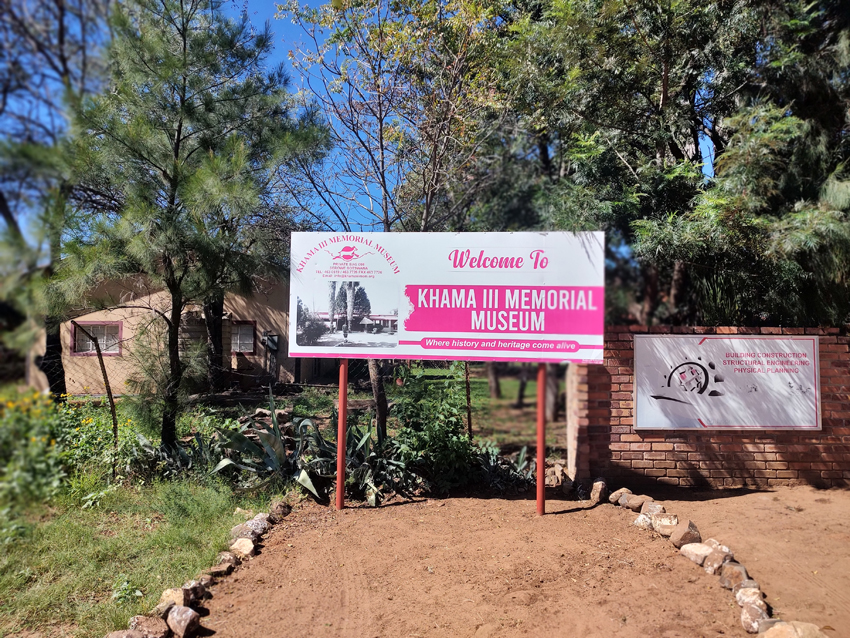
Portia Tremlett, Curator of World Cultures at Brighton & Hove Museums, and Gase Kediseng, Curator at the Khama III Memorial Museum in Botswana, on repatriation, partnership, and shared heritage.
The repatriation of cultural heritage has become one of the most significant and transformative developments in contemporary museum practice. Increasingly, museums are reconsidering the histories of their collections, particularly those formed under colonial rule, and are working with originating communities to restore ownership, context, and meaning. The partnership between Brighton & Hove Museums and the Khama III Memorial Museum in Serowe, Botswana, represents an important example of this shift. Through the ‘Making African Connections’ project and subsequent repatriation, our institutions have reinterpreted a historic collection acquired in the late nineteenth century and facilitated the return of objects to Botswana. This project demonstrates how repatriation can benefit both communities involved—restoring cultural heritage and identity in Botswana, while transforming institutional practice and public understanding in Brighton.
Historical Context and the Willoughby Collection
The origins of the repatriation project lie in the collection assembled by Reverend William Charles Willoughby between 1893 and 1899 while working as a missionary in the Bechuanaland Protectorate (present-day Botswana). Willoughby lived among the Ba-ma-Ngwato people under Kgosi Khama III and collected approximately 150 objects representing everyday life, including clothing, tools, baskets, and personal adornments. These objects were later deposited at Brighton & Hove Museums, where they remained for over a century, largely interpreted through the limited and often biased lens of colonial-era documentation.
Although Willoughby’s activities were not directly associated with violent imperial acquisition, they were nevertheless embedded within a colonial framework that shaped how objects were collected, documented, and displayed. Whilst Willoughby attempted to represent the Ba-ma-Ngwato community he cared deeply for through this collection, the voices and knowledge systems of the communities from which the objects originated were absent. As a result, the objects became separated from their cultural context and the living traditions that gave them meaning.
The Making African Connections Project and Decolonial Practice
The ‘Making African Connections’ project (2019–2021), funded by the Arts and Humanities Research Council and led by the University of Sussex, sought to address these issues by fostering collaboration between UK museums and African partners. A core aim was to advance ‘decolonising’ museum practice—challenging traditional hierarchies of knowledge and shifting authority toward originating communities.
Central to this process was partnership. Brighton & Hove Museums worked closely with the Khama III Memorial Museum, as well as Botswana-based specialists and diaspora researchers. Rather than positioning themselves as sole experts, Brighton museum staff adopted roles as facilitators, enabling shared decision-making and dialogue. This collaborative approach allowed for the incorporation of local knowledge, lived experience, and cultural understanding into the interpretation of the collection.
One significant methodological shift was the move away from a focus on the collector toward the makers and users of the objects. This involved active research in Botswana, including interviews, demonstrations, and engagement with contemporary craftspeople. Through this process, new narratives emerged that connected historical objects to ongoing cultural practices, highlighting continuity, adaptation, and creativity within Batswana communities.
Repatriation as Restoration and Cultural Renewal
The most visible outcome of the partnership has been the repatriation of 45 objects from Brighton to Botswana in May 2026. This repatriation request was the organic result of a long-term collaborative partnership and a mutual belief in the rightful return of these objects to the descendants of those who made them where their value and impact would be greater felt. The repatriation was formally requested by the Khama III Memorial Museum in 2022, generously supported by funding to ensure not only the transfer of objects but also their meaningful display within a new permanent exhibition.
These objects address a gap within Botswana’s own museum collections. The period during which the objects were originally collected is underrepresented in local institutions, and their return helps to fill this historical void. By displaying these objects alongside contemporary works and narratives, the new exhibition enables Botswana to tell their own story on their own terms.
For the Khama III Memorial Museum, it has enhanced Botswana’s cultural sector as it embarks on an innovative, community-driven repatriation model. This initiative aims to not only elevate the standards and practices of museum operations but also to empower local communities by building significant research capacity and expertise. Additionally, it seeks to expand heritage education opportunities for schools and youth, fostering a deeper understanding and appreciation of Botswana’s rich history among younger generations.
This initiative is especially vital as it facilitates essential national dialogues concerning identity, historical narrative, and ownership of cultural heritage. It underscores the proactive role that heritage institutions like the Khama III Memorial Museum can play in influencing and shaping knowledge, storytelling, and cultural narratives. The museum’s role extends far beyond the traditional view of merely preserving artefacts; it aims to actively engage with the communities it serves, fostering a dynamic and inclusive dialogue about Botswana’s cultural identity.
Regarding Botswana’s cultural tourism landscape, it is important to note that the central region has historically been overlooked in cultural representation and tourism development. By integrating repatriation initiatives into the fabric of these underserved areas, the museum is poised to transform them into vital centres for heritage exploration and academic inquiry. This approach not only highlights the rich cultural assets of central Botswana but also encourages visitors to immerse themselves in local history and traditions.
Furthermore, these initiatives are designed to motivate longer visitor stays through an array of engaging cultural programs and activities. This not only enhances the visitor experience but also stimulates local economies, creating tangible benefits for communities linked to tourism and community events. Through these efforts, the Khama III Memorial Museum is reinforcing its reputation as a regional cultural hub, acting as a beacon for heritage appreciation and identity exploration in the heart of Botswana. The synergy between cultural representation, community engagement, and economic revitalisation positions the museum as a cornerstone for both local and national cultural expression.
Repatriation as Advancement of Decolonial Practice
While repatriation is often framed as a loss for museums that return objects, this project demonstrates that it can generate significant benefits for the originating institution and its audiences. The project has allowed Brighton & Hove Museums to develop and embed decolonial methodologies into its museum practice. By working collaboratively with Botswana partners, museum staff have gained new skills, insights, and confidence in addressing colonial histories. This contributes to broader institutional change, instigating new roles focused on diversity and inclusion.
The research undertaken through the ‘Making African Connections’ project has transformed understanding of Brighton & Hove Museum’s extensive Batswana collections. By incorporating multiple perspectives, we can present more nuanced and accurate interpretations, challenging stereotypes and outdated narratives. This enhances public engagement and encourages critical reflection on Britain’s colonial past.
The partnership with the Khama III Memorial Museum has established long-term relationships that extend beyond the repatriation itself. Collaborative projects, exchanges, and shared exhibitions foster ongoing dialogue and mutual learning, benefiting both institutions. By responding positively to repatriation requests, Brighton & Hove Museums demonstrates ethical responsibility and leadership within the museum sector. This strengthens public trust and positions the institution as a progressive and socially responsible organisation.
Shared Benefits and Mutual Exchange
One of the defining features of the Brighton–Botswana project is its emphasis on mutual benefit rather than a one-sided transfer. Both institutions have contributed to and gained from the collaboration. The project has generated new knowledge through collaborative research, combining academic study with lived experience. This co-creation challenges traditional hierarchies and produces richer, more inclusive narratives.
Alongside the study of historical objects, the project involved collecting contemporary craft from Botswana, creating a dialogue across time, linking past and present and ensuring that museum collections remain relevant.
As a result of this collaborative effort, both museums have experienced a significant increase in visibility within their respective communities and beyond. This heightened profile facilitates meaningful cultural exchange, while simultaneously providing opportunities for skill development among participants, enriching the collective experience for all involved.
Is Repatriation Ever a Straightforward Process?
Despite its successes, the project also highlights challenges inherent in repatriation and international collaboration. Power imbalances remain a concern, as funding and initial decision-making were led by UK institutions. Requirements and formalities within the process were set by Brighton & Hove Museums as the institutional ‘owners’ with little flexibility. Additionally, logistical issues, such as limited resources and the impact of the COVID-19 pandemic, constrained aspects of the project.
However, open dialogue and a commitment to equitable partnership helped to mitigate these challenges. The project demonstrates that while repatriation is complex, it is achievable through transparency, collaboration, and mutual respect.
Ethical, Inclusive, and Collaborative Museum Practice
The repatriation project between Brighton & Hove Museums and the Khama III Memorial Museum represents a significant step toward more ethical, inclusive, and collaborative museum practice. By returning objects to Botswana, the project restores cultural heritage, strengthens identity, and empowers communities to tell their own stories. At the same time, it benefits Brighton by advancing decolonial practice, enriching interpretation, and fostering international partnerships.
Ultimately, the project illustrates that repatriation is not simply about giving objects back—it is about building relationships, sharing knowledge, and reimagining the role of museums in a global context. Through this process, both communities gain a deeper understanding of their interconnected histories and a stronger foundation for future collaboration.
Portia Tremlett, Curator of World Cultures, Brighton & Hove Museums
Gase Kediseng, Curator, Khama III Memorial Museum, Botswana
Published 26 June 2026