Sabari Christian DAO, Director General of the National Museum of Burkina Faso, on why African museums must rethink the very purpose of museums and the relationships they build with society. He argues a new vision is emerging, one that replaces inherited colonial models for one rooted in dialogue, participation, education and cultural expression.
Museums at a Turning Point in Their History
African museums are currently at an important moment in their history. Across the continent, institutions are being called upon to rethink their missions, their relationships with communities, their governance models and their contribution to cultural and social development. Beyond asking how collections can be preserved more effectively, museums must now consider how they can become institutions that are firmly rooted in the realities of their societies and actively contribute to education, the development of cultural identities, social cohesion and the transmission of knowledge.
For a long time, the development of museums in Africa was strongly influenced by institutional models inherited from colonial history. These models often placed collecting, classifying and preserving objects at the centre of museum work, sometimes at the expense of the communities, knowledge systems and cultural practices from which these objects came.
Today, a different vision is emerging. African museums are increasingly expected to become spaces for dialogue, participation, knowledge production and cultural expression. They must preserve the past while remaining connected to the realities of the present and the aspirations of future generations.
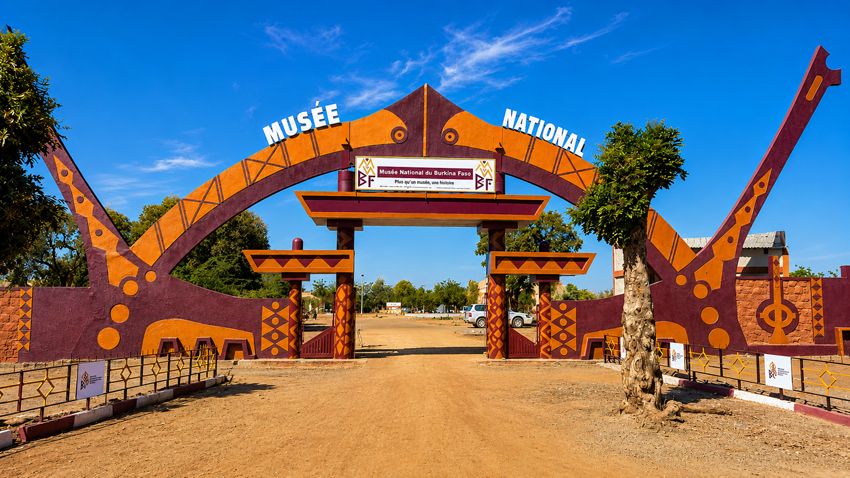
Drawing on my experience as Director General of the National Museum of Burkina Faso (MNBF), I believe that the transformation of African museums must be seen as a broad institutional process. It cannot be limited to renovating buildings or introducing digital technologies. It requires us to rethink the very purpose of museums and the relationships they build with society.
From collections repositories to institutions serving society
One of the major changes facing African museums concerns their relationship with the public. A museum cannot be defined only by the collections it owns or the exhibitions it presents. Its relevance also depends on its ability to engage in dialogue with the people whose histories, knowledge, memories and cultural expressions it helps to represent. The museum definition adopted by ICOM in 2022 provides an important framework for this reflection. By highlighting accessibility, inclusion, diversity, sustainability and community participation, it reminds us that museums are not isolated institutions. They are active members of society.
This perspective is particularly important for African museums. Cultural heritage is not limited to objects kept in storage or displayed in exhibition galleries. It also lives in oral traditions, craft skills, music, dance, rituals, traditional knowledge and everyday practices through which communities pass on their identities. This reality calls for a broader understanding of museum work.
In addition to caring for objects, museum professionals must also facilitate dialogue, mediate between different forms of knowledge, conduct research and work in partnership with communities. At the MNBF, this vision leads us to see the museum as a cultural institution that contributes to understanding contemporary Burkinabe society. The challenge is to build a museum in which people can recognise themselves: a place where they can encounter their history, share their knowledge, question established narratives and imagine their future.
Placing communities at the heart of the museum experience
The transformation of African museums must also involve a fundamental reconsideration of the place of communities. For many cultural practices, the museum is not the original place where heritage is preserved. Heritage continues to exist and evolve within communities, through the people who practise it, pass it on and reinterpret it. This is especially clear in the field of intangible cultural heritage. In Burkina Faso, for example, the balafon is connected to social relationships, collective memory, traditional knowledge, artistic expression and the transmission of culture from one generation to another. Its meaning cannot be fully understood by displaying an instrument behind a glass case alone. Understanding the balafon also means meeting the instrument makers, musicians, dancers, singers and other knowledge holders who ensure that the practice continues.
This raises a fundamental museological question: how can museums welcome and interpret living heritage without separating it from the communities that give it meaning? I believe the answer lies in developing community-centred approaches to musealisation. These approaches seek to create spaces for collaboration, documentation, interpretation and transmission, while recognising the authority and expertise of knowledge holders. Museums can therefore provide spaces for performances, workshops, intergenerational meetings, discussions and the documentation of traditional knowledge. They can also support communities in sharing their heritage with younger generations and wider audiences.
However, this participation must go beyond symbolic consultation. Communities must be involved in setting priorities, developing interpretations and making decisions about how their heritage is represented.
The transformation of museums therefore requires a shift from speaking about communities to genuinely working with them.
Rethinking museum development: infrastructure, collections and innovation
The transformation of African museums also requires investment in their institutional foundations. It is difficult to develop ambitious programmes without suitable infrastructure, appropriate storage facilities, qualified staff, sustainable funding and sufficient technical resources. At the MNBF, our development priorities are guided by this understanding.
Our institution is located on a 29.94-hectare site and holds more than 14,000 objects. These collections are an important resource for research, education and the transmission of cultural knowledge. However, beyond their size, the value of collections also depends on the quality of their documentation, preservation, accessibility and interpretation. In this regard, improving collections management and strengthening preventive conservation are essential priorities. African museums must develop solutions that respond to their operational realities. Environmental conditions, energy constraints, limited technical resources and financial difficulties often require innovative approaches. This does not mean lowering professional standards. Rather, it means identifying sustainable methods suited to local contexts and capable of achieving conservation objectives. Reorganising storage areas, improving documentation procedures, applying preventive conservation measures and training staff can produce significant results without always requiring major technological investment.
At the MNBF, the implementation of an initiative for collections management and digital transformation, known as SYGEM, reflects our ambition to strengthen institutional organisation and modernise collections management. However, digital transformation should not be reduced to purchasing software or digitising photographs. It should be understood as an institutional process that improves the quality of information, supports professional decision-making, strengthens transparency and creates new opportunities for research and cultural mediation. Technology must serve the museum’s mission; it must not become an end in itself.
The museum as a space for education and social engagement
Another important aspect of museum transformation concerns the relationship between museums and education.
In many African countries, museums have considerable potential to complement formal education systems. They offer opportunities for learning through direct encounters with objects, historical narratives, artistic expressions and cultural practices.
However, this potential is not yet fully used. Museums must move beyond the traditional exhibition model and develop more varied educational experiences. Children and young people should be able to discover museums through interactive activities, workshops, guided tours, artistic programmes and educational resources that connect cultural heritage with their everyday experiences.
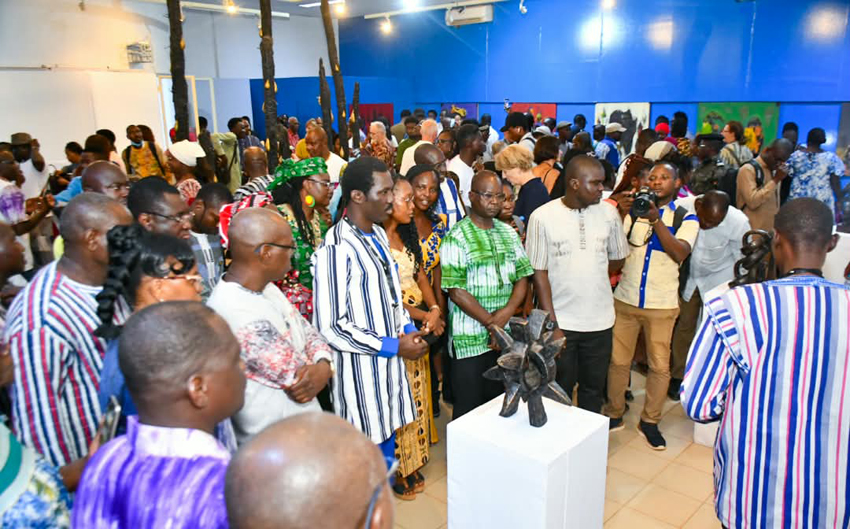
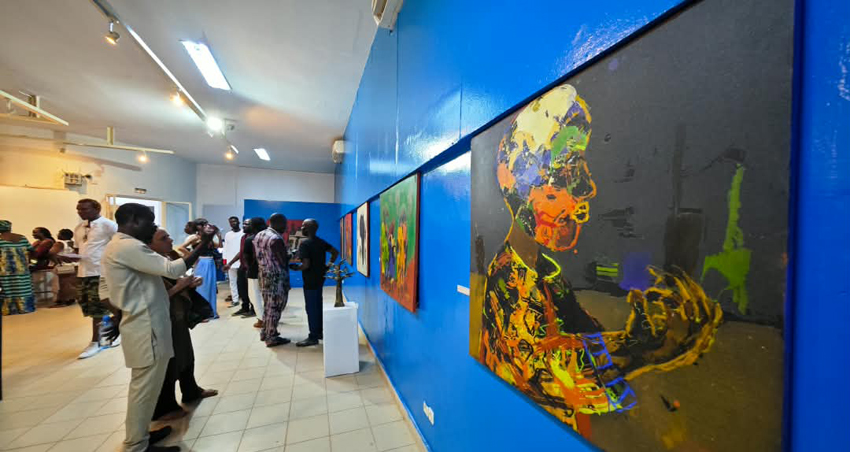
Museums must also reach people who do not naturally visit their spaces. This means developing outreach programmes outside the museum, partnerships with schools and universities, mobile educational resources and activities organised beyond museum grounds. At the MNBF, the development of educational and cultural activities is part of our ambition to strengthen the institution’s public service mission. The results show the importance of this commitment. In 2025, the museum welcomed 106,467 visitors, around 80% of whom were Burkinabe. In 2024, visitor numbers stood at approximately 40,000. Beyond these figures, this attendance represents an important opportunity to strengthen the relationship between the National Museum and the people whose heritage it helps to promote. Visitor numbers alone are, of course, not enough to measure institutional success. Nevertheless, they provide useful indications of public interest and encourage us to improve the quality, diversity and accessibility of our programmes. Our ultimate goal is to make the museum a familiar, welcoming and accessible place for all generations.
Digital transformation and the African museum of tomorrow
Digital technologies are opening up new opportunities for museums around the world. They can improve collections management, make information more accessible, support research and create new forms of interpretation. For African museums, these developments offer opportunities to overcome some geographical barriers and increase the international visibility of collections and cultural heritage.
However, digital transformation must be approached with care. The digital divide remains a major reality. Differences in connectivity, infrastructure, financial resources and technical skills can limit institutions’ ability to adopt and maintain digital systems.
In addition, digitisation raises important questions about intellectual property, cultural rights, access to traditional knowledge and the authority to decide how cultural information may be shared. Not everything that can be digitised should necessarily be made available to the public. Museums must therefore develop digital policies that respect the rights, sensitivities and expectations of communities. The African museum of tomorrow should not simply reproduce technological models developed elsewhere. It must design solutions that respond to its own priorities and realities, while taking an active part in professional networks and international exchanges. Innovation must be rooted in context.
Building partnerships and strengthening professional skills
No museum can successfully transform itself in isolation. Institutional development requires partnerships with public authorities, universities, research institutions, international organisations, cultural professionals and local communities. For African museums, international cooperation remains particularly important in areas such as conservation, restoration, documentation, digital transformation, training and research.
However, this cooperation must move beyond one-off training sessions and short-term technical interventions. A more strategic approach is needed, based on institutional priorities, skills transfer and long-term capacity building.
Partnerships should help museums strengthen their internal skills and gradually develop their autonomy. Professional mobility, joint research programmes, mentoring, institutional exchanges and collaborative projects can all contribute to this goal. At the same time, African museums must be recognised not only as beneficiaries of international cooperation, but also as producers of knowledge and expertise. The continent has considerable experience in managing cultural heritage in complex social, economic and environmental contexts. These experiences can enrich international discussions on preventive conservation, community participation, sustainable development and the future of museums. The relationship must therefore be based on mutual learning.
Towards a new vision of African museums
Ultimately, the transformation of African museums is a question of vision. What kind of museums do African societies need today? What role should these institutions play in shaping collective memories, strengthening cultural identities and preparing future generations?
I believe that African museums must strengthen their ability to define their own development priorities and contribute to international museological debate. This requires recognising the diversity of African experiences. There is no single model that can be applied to every institution. Museums operate in different historical, political, economic and cultural environments, and their transformation must take these differences into account.
Nevertheless, several principles should guide this process: stronger links with communities, improved professional standards, sustainable institutional development, inclusive governance, responsible digital innovation, and greater investment in education and research. At the MNBF, our ambition is to contribute to this transformation by building an institution that is professionally strong, socially relevant and open to the world, while remaining deeply rooted in the cultural realities of our country. The museum must be able to preserve collections, document knowledge, welcome visitors, support research and create opportunities for dialogue between generations and cultures. Above all, it must remain useful and meaningful to the society it serves.
Transforming Museums Means Transforming Relationships
The future of African museums will not be determined only by the quality of their buildings, the number of objects in their collections or the technologies they adopt. It will also depend on the relationships they build with communities, young people, researchers, public authorities and the wider international museum community. The challenge is to move beyond seeing the museum as a place that simply preserves the past and to fully recognise its potential as an institution that actively helps shape the future. This transformation requires ambition, professional commitment, institutional courage and, above all, a constant willingness to listen to the societies museums are meant to serve. For me, a successful museum is one that allows heritage to remain alive, accessible and meaningful. African museums must play their full part in building a museum institution that reflects communities and brings them together
Sabari Christian DAO
Director General, National Museum of Burkina Faso
References
ICOM. (2022). Museum Definition. Adopted at the Extraordinary General Assembly, Prague, 24 August 2022.
UNESCO. (2003). Convention for the Safeguarding of the Intangible Cultural Heritage. Paris: UNESCO.
UNESCO. (2015). Recommendation concerning the Protection and Promotion of Museums and Collections, their Diversity and their Role in Society. Paris: UNESCO.
ELHAJRI, Aimad & DAO, Sabari Christian. (2020). « L’intelligence économique et le patrimoine culturel immatériel burkinabè ». African Scientific Journal, vol. 03, n° 3, décembre 2020, pp. 46–69. DOI : 10.5281/zenodo.5535646.
MATAGA, Jesmael. (2021). « Museums in Africa: Reflections on Recent Histories, Emergent Practices and Decolonial Possibilities ». South African Museums Association Bulletin, vol. 43, pp. 18–26.
DAO, Sabari Christian. (2021). « Les expressions liées au balafon Sénoufo, patrimoine culturel immatériel de l’humanité », in E. Falk & S. Park (eds.), Traditional Musical Instruments, Sharing Experiences from the Field, Living Heritage Series, vol. 5. Jeonju: UNESCO-ICHCAP / #Heritage Alive, pp. 79–88. ISBN 979-11-962602-8-6.
Published 3 November 2026