
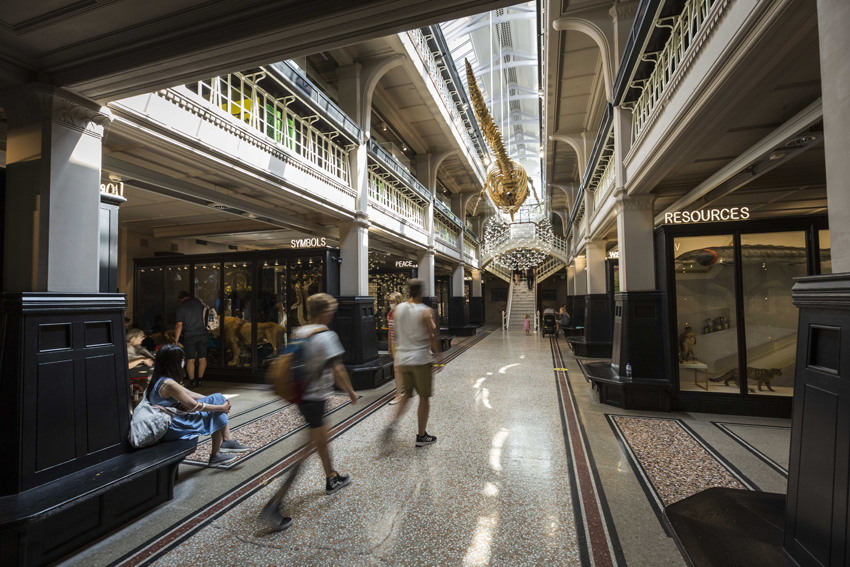
In a landmark case of cultural repatriation, Manchester Museum has returned cultural heritage items to the Anindilyakwa People of Groote Eylandt. It is an example of the unconditional return of collections being part of building a more equitable and hopeful future for museums.
Building greater understanding between cultures is central to the mission at Manchester Museum. As part of this, they are committed to the unconditional return of collections and belongings to communities of origin. They see these actions as an important way of building a more equitable and hopeful future for museums.
On 5 September 2023, a delegation from the Aboriginal Anindilyakwa community of Groote Eylandt joined staff at Manchester Museum for the formal return of 174 cultural heritage items.
Manchester Museum worked collaboratively with the Australian Institute of Aboriginal and Torres Strait Islander Studies (AIATSIS) and the Anindilyakwa Land Council over a three-year period to determine where these items should live and could best inspire future generations. For the first time, Manchester Museum staff were present in person for part of the consultation process, visiting Groote Eylandt, in Australia’s Northern Territory at the invitation of the Anindilyakwa People.
Anindilyakwa Cultural Strengthening
The return of the 174 items is already supporting Anindilyakwa cultural strengthening and revitalisation, with descendant generations using the items to connect with their heritage. Thomas Amagula, Deputy Chair of the Anindilyakwa Land Council, said:
“The Anindilyakwa Land Council represents the 14 clans who are the Traditional Owners of the land and seas of the Groote Archipelago, and the repatriation of the Worsley Collection by Manchester Museum is an important step for the ALC in pursuing one of our core visions: to ‘protect, maintain, and promote Anindilyakwa culture’. We have only just begun to appreciate how valuable the repatriation of the Worsley Collection will be in the future.”
This is powerfully demonstrated through a group of dolls made from shells – Dadikwakwa-kwa – which have unlocked a rich cultural history and inspired the Dadikwakwa-kwa Project, a contemporary art programme led by ten talented women from Anindilyakwa Arts.
Two of the artists, senior elder Noeleen Lalara and emerging leader Maicie Lalara, were part of the delegation of Anindilyakwa women who were welcomed to Manchester Museum for the handover, alongside emerging leader Amethea Mamarika.
The Dadikwakwa-kwa Project was partly inspired by the conversations that took place with Amethea’s grandmother, Old Lady Edith Mamarika, on Groote Eylandt around her memories of the shell dolls now being returned. Traditionally painted by parents for their daughters using intricate ochre designs, they have helped to strengthen cross-generational bonds within the Anindilyakwa community. The project was a finalist in the 2023 National Aboriginal and Torres Strait Islander Art Awards.
This process has also paved the way for future collaboration between the Anindilyakwa People and Manchester Museum, including a display of contemporary works from Anindilyakwa Arts.
Collaboration
Manchester Museum has collaborated with AIATSIS over the past five years and previously returned sacred and ceremonial items to Aboriginal communities. The current repatriation goes further, embracing the full scope of the United Nations Declaration on the Rights of Indigenous Peoples by returning material beyond the secret, sacred and ceremonial that is important to the traditions and memories of the Aboriginal community that made them.
The aim is to reimagine the role of museums by shifting emphasis toward caring for people as well as objects, building greater understanding and empathy between cultures by working
with communities to tell their stories in different ways
It follows in a 20-year history of returning items to Indigenous communities and is guided by Manchester Museum’s values of inclusivity, imagination and care, underpinned by the University of Manchester’s own commitment to social responsibility. The aim is to reimagine the role of museums by shifting emphasis toward caring for people as well as objects, building greater understanding and empathy between cultures by working with communities to tell their stories in different ways.
Leonard Hill, Acting Chief Executive of AIATSIS, said:
“AIATSIS and the Manchester Museum have a productive and committed partnership and I thank them for their collaborative and ethical approach to caring for their collections and respecting the Anindilyakwa community’s wish to have their material returned to Country.
“This is a highly significant return and demonstrates how respectful partnerships between AIATSIS, First Nation communities and overseas collecting institutions can create opportunities for people to encounter, engage and be transformed by the stories of Aboriginal and Torre Strait Islander Peoples.”
Georgina Young, Head of Exhibitions and Collections, Manchester Museum said:
“Having spent time on Groote Eylandt at the invitation of the Anindilyakwa People makes reaching this point of handover feel momentous in a different way to any of Manchester Museum’s past returns. Sitting with Elders and hearing them discuss this collection on the their land in their terms has enabled me to understand and care in ways not possible in a store room in Manchester, and brought us to a place of understanding together.
“We are excited by all that this return makes possible in terms of future partnership, but more so by how it supports Anindilyakwa cultural strengthening for years to come.”
Stephen Smith, Australian High Commissioner to the United Kingdom, added:
“The return of these significant cultural heritage items is important for Australia’s reconciliation process. It also helps renew cultural practices and safeguard such practices and items for future generations.
“Returning this collection of items to representatives of the Anindilyakwa community and the children and grandchildren of those who made them is a great thing. I commend the collaborative way in which AIATSIS, Manchester Museum and the Anindilyakwa community have brought this project to fruition.”
Quoted in The Guardian (Manchester Museum hands back 174 objects to Indigenous Australian islanders, 5 Sep), Esme Ward, Director of Manchester Museums said “We believe this is the future of museums. This is how we should be.” Esme went on to say she was not telling other museums what they should do “but if people are inspired by our commitment to build relationships, that would be great.”
First published in the 2023 print edition of Museum-ID magazine (12 October 2023)